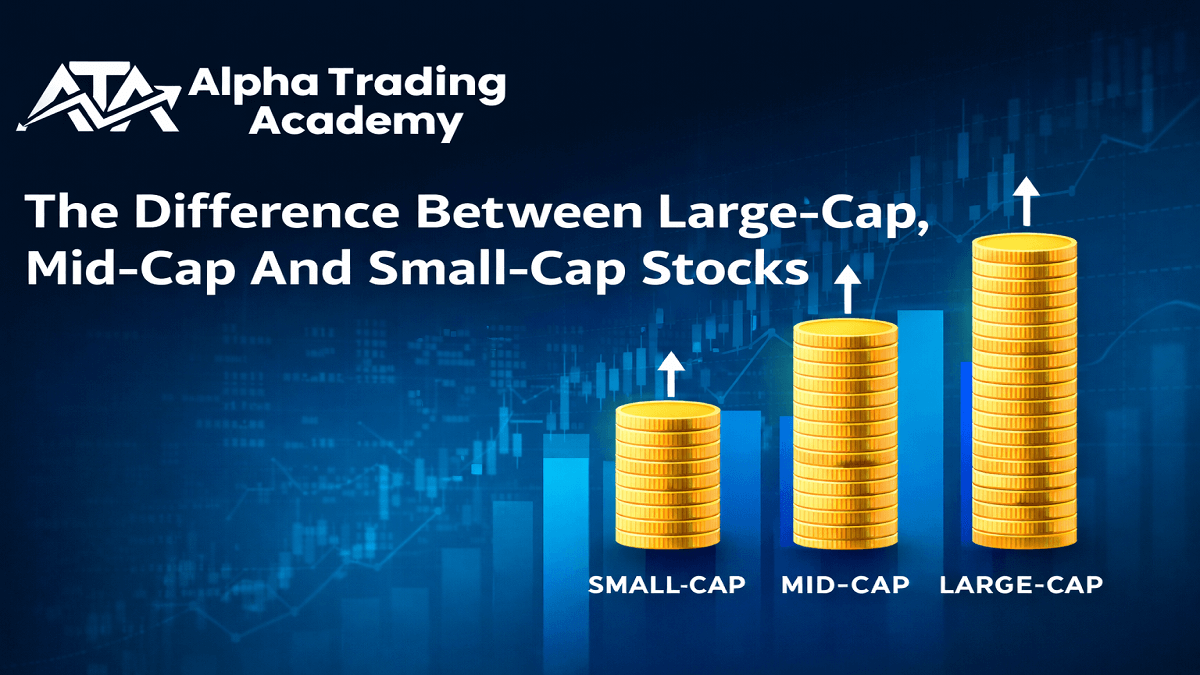
If you are planning to invest in the stock market one of the first things you will hear is to choose the right type of stock: large cap mid cap and small cap. But what do these terms actually mean? Don’t worry, in this guide you can learn everything about stock categories.
What does market capitalization mean?
Before understanding types of stocks, like small cap mid cap or large cap you need to understand market capitalization. It is also known as market cap. Market capitalization is a fancy way of saying the total value of a company in the market. It is calculated like market cap equals to current share price Multiplied by total number of shares. For example a company’s share price is ₹100 and it has 10,00,00,000 shares then the market cap is around 1000 crore. The company would fall into a specific category depending on the value . The market capitalization helps you understand the company size, stability , growth potential and the risk level.
What are large cap stocks
Large cap stocks are companies that are big, well established and trusted. They usually have a market capitalization of more than 20,000 crore or more. The companies are household names like Reliance Industries, TCS HDFC and Infosys. They have been around for years and have proven themselves in the market.
Main features of large cap stocks
Large cap companies are financially strong so they do not usually face sudden collapses or major instability. They might not grow really fast but they grow consistently. A lot of large cap companies give regular dividends which provide you passive income. If you don’t like taking big risks, large cap stocks are just your best bet.
What are mid cap stocks
Mid cap stocks fall between large cap stocks and small cap stocks. They have market capitalization of anywhere between 5000 crores to 20,000 crores. The companies are still growing; they might not be as stable as large caps but they are not as risky as small caps.
Main features of Mid cap companies
Mid caps can become tomorrow’s large caps. They are small and expanding. They might face challenges during market downturns but also recover faster than small caps. Mid caps offer a mix of growth and stability.
What are small cap companies
Small cap stocks are companies with a market capitalization of below 5000 crore. They are usually young companies or emerging brands still trying to make their mark. Examples include new tech startups or small manufacturing companies.
Main features of small cap stocks
Small cap companies can grow rapidly, sometimes doubling or tripling in a few years. They are more sensitive to economic changes and market volatility. You need to be patient because small caps can be unpredictable in the short term. Small cap stocks usually have lower share prices as compared to the other companies making them attractive to the new investors.
Comparing large cap mid cap and small cap
| Feature | Large-Cap | Mid-Cap | Small-Cap |
| Company Size | Very Large | Medium | Small |
| Risk Level | Low | Medium | High |
| Growth Speed | Slow & Steady | Moderate | Fast |
| Stability | Very High | Moderate | Low |
| Best For | Conservative investors | Balanced investors | High-risk takers |
| Volatility | Low | Medium | High |
| Dividend | High | Moderate | Low to None |
Which stock category should you choose?
The answer depends entirely on your equity investment Lifestyle goals and address capitate. If you want safety and steady returns you can choose large cap stocks. If you want growth with moderate risk you can choose midcap stocks. If you want high returns and can handle risk choose small cap stocks. An example of a balanced portfolio is 50% large cap for stability, 30% mid cap for growth and 20% small cap for higher returns. Of course you can adjust it based on your comfort level.
Why do investors use these stock categories?
Stock categories help you make smarter decisions. Large caps are less risky and small caps are more risky. The categories help you compare companies easily like market cap shows the company size and strength. It guides you in building a diversified portfolio. When you mix different types you can reduce the overall risk. It aligns with your short term goals like you can understand short term? Long-term? Market cap helps you choose accordingly.
How market conditions affect each category
During economic growth
During the economic growth time small caps grow the fastest and mid caps also perform well. Large caps during this time grow slowly but steadily.
During recession or downturn
Large caps are more stable and fall less while mid caps might drop more than large caps. The small caps usually fall the hardest. This is why diversification is more important.
Tips for choosing the right type of stock
Understand your risk level. If you panic easily, small caps might not be for you. A mix of large mid and small cap stocks reduce your overall risk. You must research before buying, like looking at the company history or financial performance. Think long term as stock market wealth is built with patients. Review your portfolio regularly and make adjustments as your goals or market conditions change.
So understanding the difference between large cap mid cap and small cap stocks help you become a smarter and a more confident investor. A good investor wasn’t just one category; they built a healthy mix based on their goals and risk tolerance. Whether you are a beginner or someone looking to refine their investment strategy knowing the categories is the foundation of smart equity investing.
At Alpha Trading Academy, we believe that understanding the difference between large-cap, mid-cap, and small-cap stocks is a core foundation of smart investing. Many traders enter the market chasing quick profits without knowing how market capitalization impacts risk, stability, and long-term returns. Our training focuses on helping investors build the right mindset and portfolio structure—using large caps for stability, mid caps for balanced growth, and small caps for calculated opportunities. By learning how to align stock categories with your financial goals and risk tolerance, you can trade and invest with clarity, discipline, and confidence rather than guesswork.
FAQs
Which is safer: large cap mid cap or small cap stocks?
Large cap stocks are the safest because they belong to strong potential companies. Small caps are riskier but offer higher growth potential.
Are mid cap stocks good for beginners?
Yes mid cap stocks can be a good choice because they offer a balance between risk and growth. But beginners should still mix them with large cap stocks for safety.
Can small cap stocks give high returns?
Absolutely small caps can grow rapidly and often deliver higher returns. But they are more volatile so invest carefully with a long term mindset.